
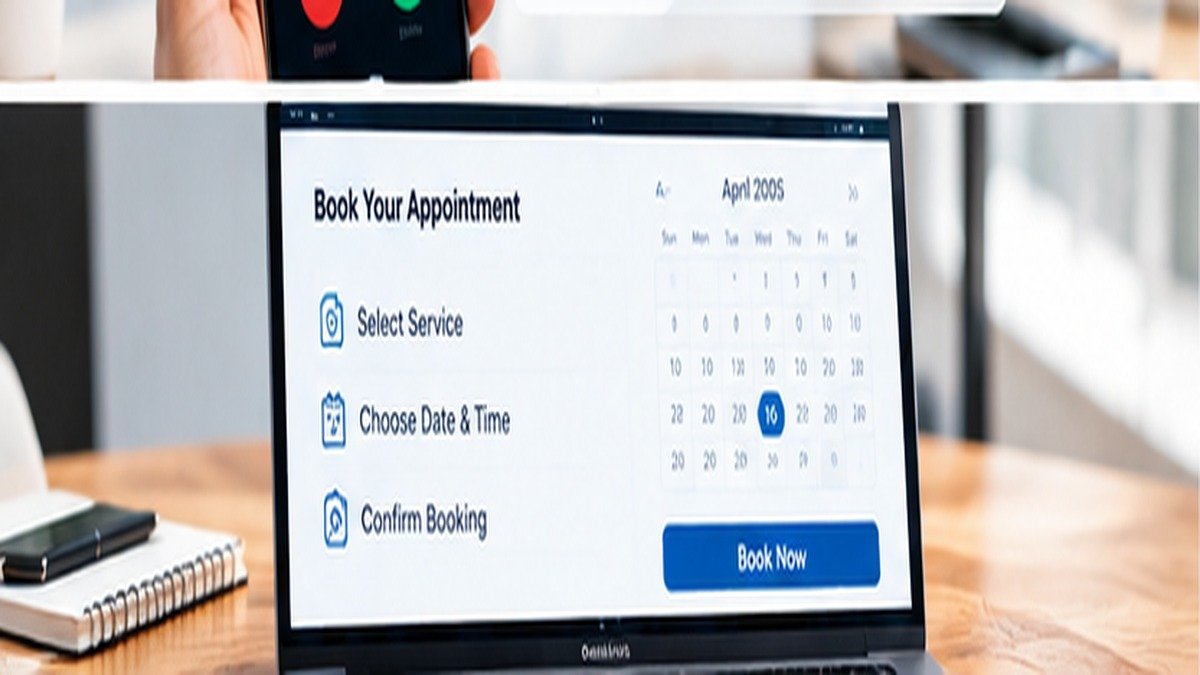
Pest Control Appointment Booking Best Practices
What you’ll learn
- Why inefficient appointment booking erodes route density and customer satisfaction.
- The operational benefits of flexible arrival windows versus exact-time appointments.
- Multi-channel notification workflows that cut customer no-shows by 25% to 30%.
- How to structure your online and phone booking funnel to capture higher average job values.
The True Cost of Inefficient Booking
In pest control, an appointment is not just a calendar placeholder—it is an operational commitment involving vehicle dispatch, technician travel time, and inventory allocation. When a customer fails to provide access to a locked gate, forgets an indoor appointment, or cancels while the technician is in transit, the business loses billable labor hours and burns unrecoverable fuel.
Industry data indicates that field service companies without structured reminder workflows experience customer no-show rates between 15% and 20%. For a company completing 400 appointments per month with an average service fee of $150, reducing no-shows by just half can recover $4,500 to $6,000 in monthly revenue while preserving technician morale. [OUR CALCULATION]
Five Best Practices for Modern Pest Appointment Booking
1. Adopt Realistic Arrival Windows Over Fixed Minutes
Never schedule exact minute times (e.g. 10:15 AM) for field service unless performing high-stakes commercial audits. Traffic delays, extended inspections on prior jobs, and customer conversations inevitably cause minor schedule drift.
- Standard Practice: Use 2-hour arrival windows (e.g. 8:00 AM – 10:00 AM, 10:00 AM – 12:00 PM, 1:00 PM – 3:00 PM).
- Customer Communication: Clarify that the window represents technician arrival, not job completion.
2. Implement the Three-Touch Automated Reminder Sequence
Booking Confirmation (Immediate) -> 48-Hour Reminder with Confirmation Prompt -> "On the Way" Alert with Live Tracking- Immediate Confirmation: Instant SMS and email upon booking containing appointment date, arrival window, technician name, and pre-service instructions (e.g. clearing under-sink cabinets or keeping pets indoors).
- 48-Hour Confirmation Request: Automated text asking the homeowner to reply “C” to confirm or “R” to reschedule. If unconfirmed after 24 hours, office staff can follow up proactively.
- Day-Of “On the Way” Alert: Automated notification triggered when the technician clicks “En Route” on their mobile app, providing an estimated arrival time based on live GPS data.
3. Clear Property Access Protocols in Advance
Indoor pest treatments and termite inspections require adult homeowner presence and unobstructed interior access. Exterior perimeter maintenance treatments do not.
- Explicitly tag appointments as Interior Required or Exterior Only.
- For exterior recurring treatments, inform homeowners that gates must be unlocked and pets secured, but physical presence is not required. This single distinction cuts scheduling bottlenecks in half.
4. Provide Self-Service Online Rescheduling
Make it effortless for customers to adjust appointment times online rather than forcing them to call during business hours. When customers face friction to reschedule, they simply ignore reminders and fail to be home when the truck arrives.
5. Require Card-on-File Tokenization for New Accounts
Requiring a credit card or debit card on file during initial appointment booking significantly reduces phantom bookings and fraudulent requests while establishing the foundation for recurring autopay.
Booking Channel Comparison
| Booking Channel | Conversion Velocity | Staff Overhead | Operational Risk |
|---|---|---|---|
| Inbound Phone with CSR | High (human rapport) | High (requires dedicated staff) | Susceptible to hold-time abandonment |
| 24/7 AI Voice Receptionist | Immediate (zero wait time) | Low (automated CRM sync) | Requires defined fallback rules for complex queries |
| Website Self-Scheduling Widget | High for standard services | Minimal (automated calendar capture) | Must enforce geographic territory constraints |
| After-Hours Voicemail | Extremely Low (<20% callback rate) | High (next-day phone tag) | High caller drop-off to competitors |
Measuring Booking Efficiency: Key Metrics to Track
- First-Time Access Rate: Percentage of scheduled stops completed without gate locks, unrestrained pets, or missing homeowners. (Target: >95%).
- Lead-to-Appointment Conversion: Percentage of qualified inbound inquiries that result in confirmed calendar bookings. (Target: >65%).
- Cancellation & Reschedule Velocity: Lead time provided when customers cancel; allows dispatchers to backfill open calendar slots with nearby customers.
Related Research & Practical Resources
- Appointment Booking Operational Hub – In-depth solutions for customer scheduling friction.
- AI Receptionist for Pest Control – Automate appointment booking directly from inbound phone calls.
- Lead Follow-Up Automation Guide – Re-engage prospective customers who abandon the booking funnel.
All financial calculations marked [OUR CALCULATION] represent illustrative operational models based on typical field service appointment averages. Independent editorial research.