
Pest Control Estimating Software Review
What you’ll learn
- How specialized pest control estimating differs from generic contractor bidding tools.
- Key estimating features: perimeter linear-foot calculators, tiered service packages, and digital contract signing.
- Unbiased evaluation of leading platforms (GorillaDesk, FieldRoutes, Jobber).
- A checklist for selecting software that increases quote win rates while protecting gross margins.
The Challenge of Estimating in Pest Control
Estimating in pest control requires balancing standardized square footage pricing with variable property inspection findings. A proposal for termite barrier treatment must calculate foundation perimeter linear footage, slab drilling requirements, and chemical application volumes under strict EPA label regulations.
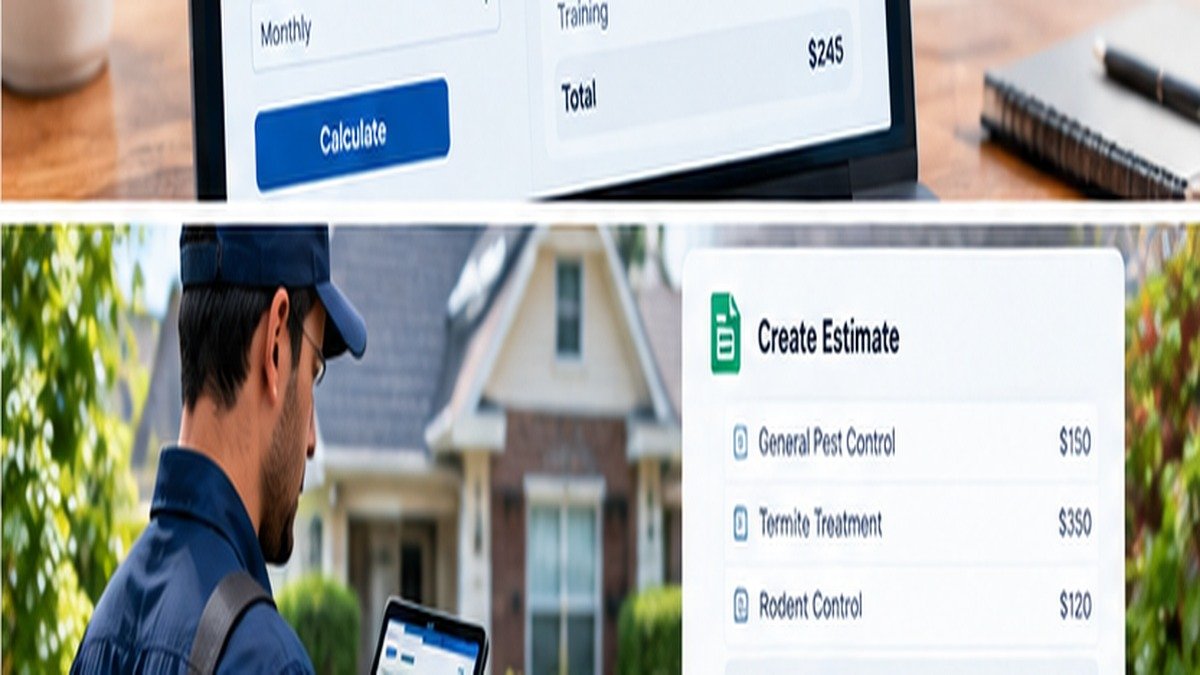
Conversely, residential recurring maintenance quotes must present clear choices—such as Good/Better/Best tiers covering general pests, mosquito reduction, and rodent monitoring. When technicians rely on handwritten paper bids or clunky manual calculations, quotes suffer from pricing inconsistency, delayed delivery, and low closing rates. Providing professional digital proposals on-site can lift close rates by 10% to 15%. [OUR CALCULATION]
Essential Estimating Capabilities to Look For
| Capability | Purpose in Pest Control | Operational Impact |
|---|---|---|
| Linear & Square Footage Pricing | Automatically calculates job prices based on measured foundation or lawn dimensions. | Eliminates manual math errors and ensures consistent gross profit margins. |
| Tiered Proposal Presentations | Displays optional add-on services (e.g. mosquito sprays, crawlspace vapor barriers) side-by-side. | Increases average ticket size by empowering customers to choose higher-tier plans. |
| Digital E-Signatures & Deposit Capture | Allows customers to review and approve bids on mobile devices with integrated credit card deposits. | Reduces bid-to-booking turnaround from days to minutes. |
| Inspection Photo & Diagram Markup | Embeds property photos highlighting pest entry points, termite mud tubes, or conducive conditions. | Builds homeowner trust through clear visual evidence. |
| Instant Work Order Conversion | Converts signed estimates directly into scheduled work orders and recurring billing contracts. | Eliminates duplicate office data entry and administrative bottlenecks. |
Leading Pest Control Estimating Solutions
1. GorillaDesk (Pro Plan)
- Estimating Focus: Streamlined digital proposals designed for rapid field creation on iOS and Android tablets.
- Key Features: Itemized price lists, custom proposal templates, photo attachments with markup tools, electronic customer signatures, and automated quote status tracking.
- Pricing: Included within GorillaDesk Pro plans (starting around $99/month for primary user + scalable technician seats).
- Strengths: Exceptionally fast on-site creation; technicians can inspect a home, generate a professional proposal, and collect a deposit at the front door in under 10 minutes.
- Trade-Offs: Less suited for complex multi-facility commercial tenders requiring multi-building blueprint takeoffs.
2. FieldRoutes Sales & Mobile Estimating
- Estimating Focus: Enterprise sales enablement tool built for high-velocity residential sales teams and commercial account executives.
- Key Features: Integrated aerial property measurement, customizable bundled service packages, automated electronic agreement routing, and commission tracking.
- Pricing: Custom quote based on sales seat volume and fleet scale.
- Strengths: Seamless integration with the broader FieldRoutes scheduling and recurring billing ecosystem; powerful reporting on sales rep closing percentages.
- Trade-Offs: Configuration requires time to build standardized pricing matrixes and service packages.
3. Jobber (Quotes & Client Hub)
- Estimating Focus: Clean, consumer-friendly interactive quoting system.
- Key Features: Client hub where homeowners can review bids, select optional line-item upgrades, approve contracts, and submit initial deposits online.
- Pricing: Available across standard Jobber subscription plans ($49 to $149+/month).
- Strengths: Outstanding customer-facing presentation and automated follow-up reminders when quotes remain unreviewed.
- Trade-Offs: Lacks native chemical dosage calculators and state-mandated termite warranty disclosure disclaimers.
Evaluation Checklist for Pest Control Estimating
- Does the estimating software allow technicians to attach photos of pest activity directly to line items?
- Can proposals display recurring monthly/quarterly fees alongside initial clean-out charges?
- Does the tool capture state-required regulatory disclosures and termite warranty terms?
- Does the software automatically alert sales staff when a customer opens and views a proposal?
- Can signed estimates automatically generate the corresponding recurring invoice and calendar appointment?
Roadmap to Streamlining Your Quoting Workflow
- Standardize Unit Pricing: Establish firm formulaic pricing for your core services (e.g. $8-$15 per linear foot of termite trenching; $125 base fee up to 2,500 sq ft plus $25 per additional 500 sq ft).
- Build Good/Better/Best Templates: Configure 3 standardized service tiers to give prospects clear buying options without overwhelming them with itemized line items.
- Enforce On-Site Proposal Delivery: Train technicians and sales representatives to present the proposal to the homeowner before leaving the property whenever feasible.
- Automate Proposal Reminders: Set automated SMS and email reminders to fire 24 and 72 hours after quote delivery if the customer has not signed.
Related Research & Practical Calculators
- Pest Control Software Research Directory – Dedicated software hub for estimating solutions.
- GorillaDesk vs. Jobber Comparison – In-depth breakdown of pest-native quoting vs general field service trade proposals.
- Software Cost Calculator – Project total platform licensing expenses across your sales and service staff.
- AI Receptionist for Pest Control – Automate initial phone qualification before dispatching technicians for on-site estimates.
All statements labeled [OUR CALCULATION] represent author-derived operational models based on typical trade proposal close rates. Platform specifications reflect independent editorial research.